From Cow Field to Commuter Town: The Surprisingly Gripping History of Eastleigh
Before the Bargate Centre, before Lidl, before any of it — Eastleigh was basically nothing, and that's exactly what makes its story so remarkable.
Picture this: it's 1838, and where the Belfry Shopping Centre now stands, there are cows. Just cows. A few scattered farmhouses, a lane called Bishopstoke Road, and an almost aggressive lack of anything happening. Then the railway came, and Eastleigh went from nobody to somebody in the space of a single generation.
The Railway Built This Town — Full Stop
Eastleigh as we know it is essentially a Victorian railway project that got out of hand in the best possible way. The London and South Western Railway arrived in 1839, and with it came the workers, the families, the pubs, and the ambition.
The real turning point was 1891, when the LSWR made the decision to relocate its locomotive works from Nine Elms in London down to Eastleigh. Thousands of workers followed. Streets went up almost overnight — Campbell Road, Desborough Road, Leigh Road — named with all the imagination you'd expect from Victorian railway managers, but packed with real life.
At its peak, the Eastleigh Works was building and repairing locomotives that ran across the entire south of England. The town didn't just support the railway; the railway was the town.
From Market Village to Manufacturing Powerhouse
Before all of this, Eastleigh was technically part of the ancient parish of South Stoneham, a fact that locals have been almost entirely unbothered by ever since. The area around what is now the High Street was modest at best — a few inns, a church, and the kind of quiet that modern Eastleigh residents can only experience at 4am on a Tuesday.
The population explosion that followed the railway relocation was staggering. By 1900, Eastleigh had its own Urban District Council, its own identity, and a whole lot of terraced houses going up faster than you can say "planning permission."
The town was incorporated as a Municipal Borough in 1936 — a moment of civic pride that deserves far more bunting than it ever received.
Spitfires, Sacrifice, and the War Years
If the railway defined Eastleigh's Victorian era, the Second World War defined its character. The Supermarine factory at Eastleigh Airport — yes, that Eastleigh Airport, still operating off Twyford Road — produced Spitfires during the war, making the town a legitimate target for Luftwaffe bombing raids.
The airfield itself has roots going back to 1910, making it one of the oldest licensed aerodromes in the country. The first commercial flights from Southampton operated out of here. It's the kind of local fact that should be on a plaque somewhere prominent but is instead largely ignored in favour of arguing about parking.
The Town That Kept Reinventing Itself
Post-war Eastleigh did what mid-century English towns do — it expanded, it built, it occasionally made questionable architectural decisions. The Fleming Park leisure complex opened in the 1970s, giving locals a place to swim and the Lakeside area a genuine focal point that it still holds today.
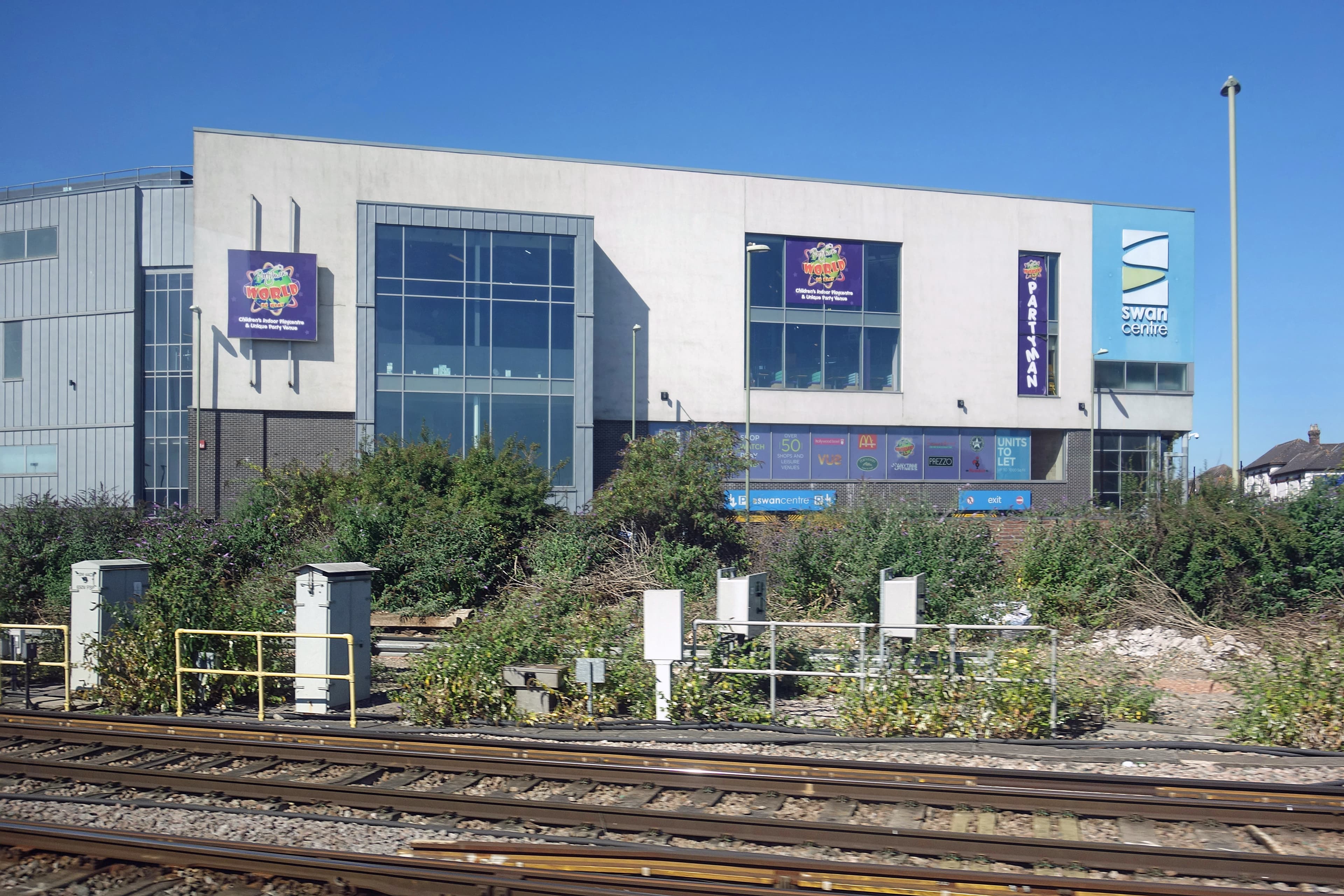
The Bargate Centre brought retail to the High Street in the 1990s. The Swan Centre followed. Leigh Road remained, as it always has, the beating commercial artery of the town — a proper high street that, unlike so many others, has stubbornly refused to fully give up.
Eastleigh FC, playing at the Silverlake Stadium on Stoneham Lane, has become a source of genuine local pride, rising through the non-league pyramid with the kind of quiet determination that feels very on-brand for this town.
So What Is Eastleigh, Really?
It's a place that was built for a purpose, filled with people who came to work, and somehow became a community that actually works. It's not Winchester's postcard prettiness or Southampton's big-city noise. It's something more honest than either.
Eastleigh was made by railways and shaped by war, and it's still here — still building, still complaining about the one-way system, still being quietly brilliant.
Not bad for a cow field.